


A guest sends an enquiry about a summer stay. One property replies with a personalised proposal and clear next steps. Another sends a brief email with a room rate. A third forwards the request to a central reservations team, where responsibility for following up remains unclear.
Each property may offer an excellent experience once the guest arrives. Yet the quality of the booking conversation already varies.
For hotel management companies, this is a practical challenge: delivering a dependable standard of service across properties with different teams, facilities, identities, and operating routines.
A boutique city hotel, a coastal resort, and a collection of private villas each need an approach that reflects their guests. At the same time, the management company needs clear responsibilities, reliable information, and visibility into how enquiries become bookings.
The foundation is a shared way of working that gives every property room to express its character.
Five foundations for a consistent
The portfolio service framework
Multiple properties.
Connected service.
Five foundations for a consistent portfolio.
Shared standards
Agree what every guest enquiry and proposal should include.
A dependable level of communication.
Clear ownership
Assign responsibility for each enquiry and its next action.
Fewer missed or duplicated responses.
Property identity
Maintain accurate content, imagery, and services for each hotel.
Offers that reflect the actual stay.
Reliable handovers
Pass confirmed arrangements to the team delivering them.
Continuity from booking to arrival.
Management visibility
Review response times, follow-ups, and outcomes consistently.
Better-informed operational decisions.
Define What Should Be Consistent Across the Portfolio
The first step is deciding what a guest should be able to expect from every managed property.
These expectations should be specific enough for teams to use in daily work. “Provide excellent service” is an ambition. A clear process explains what staff should do.
For enquiry handling, shared standards could include:
- Acknowledge the request within an agreed timeframe.
- Answer the guest’s specific questions.
- Check availability and pricing before confirming an offer.
- Explain inclusions, exclusions, and booking conditions.
- Record the next action and who owns it.
- Pass confirmed arrangements to the relevant property team.
The details of the offer can vary by hotel. The care taken to prepare it should be dependable.
A family resort might highlight connecting rooms and children’s activities. A city hotel might focus on transport and meeting facilities. Both should provide accurate information and a clear route to booking.
Make Enquiry Ownership Clear
When several properties and a central office are involved, the same enquiry can pass through multiple hands.
A request might arrive through a hotel’s website, reach a general inbox, and then be forwarded to a reservations colleague. If responsibility is assumed rather than assigned, a promising conversation can lose momentum.
Every enquiry should have an identifiable owner, even when several people contribute to the response.
The team should be able to answer:
- Which property or properties is the guest considering?
- Who is responsible for replying?
- What information is still needed?
- Has a proposal been sent?
- What is the next action, and when is it due?
Ownership also needs a backup arrangement. If the responsible colleague is away, another team member should be able to understand the conversation and continue it.
Our guide to managing hotel enquiries and proposals efficiently explores how organising this stage can support a more structured booking process.
Preserve Each Property’s Identity
A shared process should help staff represent each hotel accurately.
Guests need to understand the property they are considering: its atmosphere, accommodation options, location, facilities, and services. Generic descriptions can leave important differences unexplained.
A useful approach is to maintain an approved content set for each property, covering:
- Current room descriptions and photographs.
- Available facilities and experiences.
- Transfer and arrival information.
- Dining and other optional services.
- Property-specific booking conditions.
- The person responsible for keeping those details current.
Shared templates can provide a consistent structure while allowing teams to select the content relevant to the guest.
For example, two proposals may both include accommodation, transport, and dining options. The photographs, descriptions, and recommendations should reflect the specific hotel and the purpose of the trip.
This makes consistency compatible with individuality.
Present Suitable Alternatives When the First Choice Is Unavailable
Managing several properties can create opportunities to help guests find a suitable alternative.
The portfolio matching exercise
One enquiry. Three properties.
The right match.
Choose a guest scenario. Explore what your team should check before recommending a property.
The guest enquiry
A family of four wants a week by the coast, flexible dining and enough space for everyone.
Boutique hotel
- Check connecting rooms or a family suite.
- Confirm access to the coast and suitable transport.
- Explain dining options and any age restrictions.
Consider if the room layout and location meet the family’s priorities.
Coastal resort
- Confirm family room availability and bedding.
- Check pools, beach access and age-appropriate activities.
- Explain meal plans and what is included.
Consider if the facilities suit the children and the proposed dates.
Private villa
- Check bedroom layout and pool safety arrangements.
- Confirm kitchen facilities and grocery access.
- Explain housekeeping and transport requirements.
Consider if the family values space and independent arrangements.
Before sending the alternative
Illustrative scenarios. Property type alone does not establish suitability; confirm the actual facilities, availability and guest requirements.
Showing: Family holiday.
Consider a couple looking for a quiet coastal stay. Their preferred hotel is fully booked, but another property under the same management may suit their dates and preferences.
A useful response explains why the alternative is relevant. It should make differences clear, including location, room type, facilities, price, and any conditions.
Before recommending another property, the team should check:
- Whether it meets the guest’s main requirements.
- Whether availability and rates have been confirmed.
- Who will prepare and send the revised offer.
- Who will continue the conversation if the guest is interested.
The handover should preserve the guest’s original request, so they do not have to repeat the same information.
Where properties have separate ownership or commercial arrangements, agree the referral process and responsibilities in advance.
Turn Proposals Into a Clear Picture of the Stay
A proposal is an opportunity to help the guest understand what they are choosing.
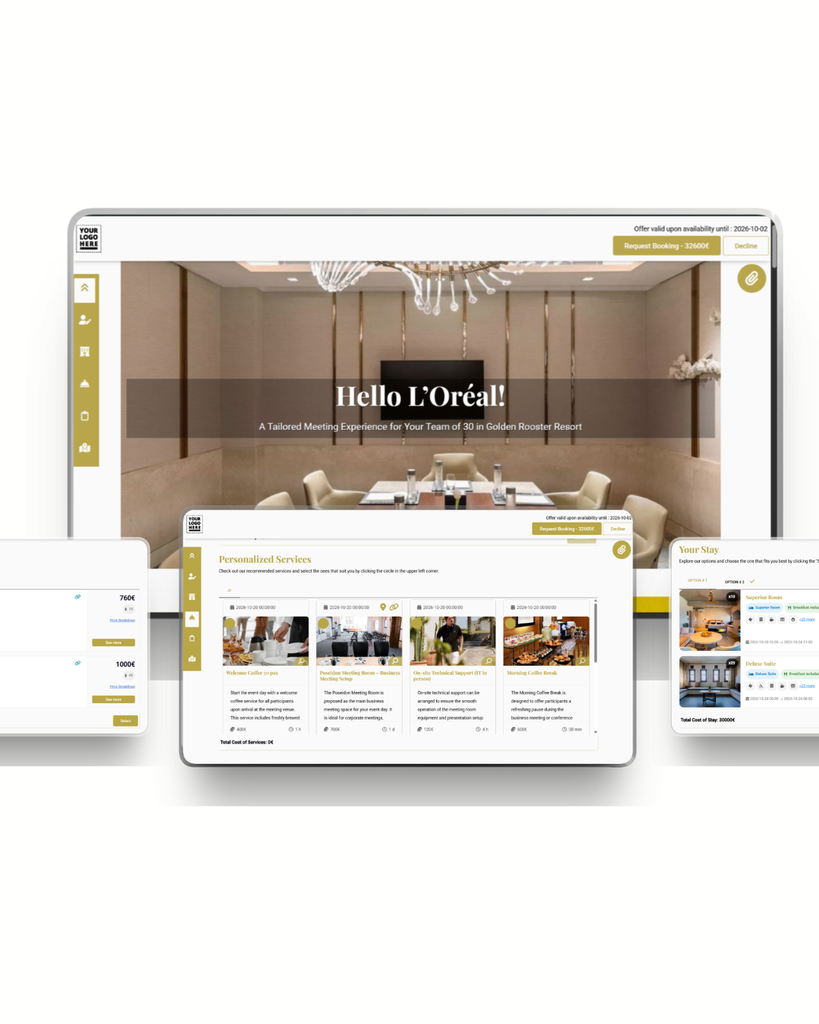
Alongside accommodation and price, it can explain relevant services, practical arrangements, and optional experiences. The content should be easy to review and appropriate to the enquiry.
For hotel management companies, a shared proposal structure can help teams check that essential information is included while allowing each offer to remain personal.
A useful structure might cover:
- The guest’s requested dates and accommodation.
- Suitable room or property options.
- What is included in the quoted price.
- Relevant optional services.
- Booking conditions and the next step.
Additional services should have a clear connection to the stay. An airport transfer may be helpful for a late arrival. A dining experience may suit a celebration. An unrelated list of extras can make the offer harder to assess.
For more ideas, see our article on hotel ancillary revenue for seasonal hotels, which explores services and experiences beyond the room booking.
Connect the Booking Promise to On-Property Delivery
A well-prepared proposal creates expectations that the property team must be ready to fulfil.
If a transfer, room arrangement, or celebration package has been confirmed, the relevant colleagues need to know what was agreed.
The handover from reservations to operations should distinguish between:
- Services included in the booking.
- Optional services the guest has accepted.
- Requests that are still awaiting confirmation.
- Preferences shared by the guest.
- Outstanding actions and their owners.
This distinction matters. A guest asking whether early check-in is possible has made a request; the team should not treat it as a confirmed arrangement unless it has been approved.
Management companies can establish a common handover format across their portfolio, with room for property-specific details. Each property should also have a clear way to flag arrangements it cannot deliver as planned.
The goal is to keep the booking conversation connected to the actual guest experience.
Give Management a Useful View of Performance
A portfolio review should help management identify where teams need support.
Start with a small set of measures that can be defined consistently, such as:
| Measure | What it helps you understand |
| Time to first meaningful response | How quickly a guest receives a useful answer beyond an automated acknowledgement. |
| Open enquiries without a next action | Where responsibility or follow-up may be unclear. |
| Time from complete enquiry to proposal | Where preparing an offer may be slowing down. |
| Enquiry-to-booking conversion | How many eligible enquiries lead to confirmed bookings. |
| Recorded reasons for lost enquiries | Whether price, availability, suitability, timing, or another issue influenced the outcome. |
Agree what each measure includes before comparing properties.
A hotel handling straightforward leisure requests will have a different workload from one preparing complex group proposals. Interpret performance alongside enquiry type, staffing, seasonality, and property positioning.
The purpose of the review is to find useful questions: Does a team need better information? Are approvals taking too long? Are proposals being sent without a planned follow-up?
Keep Procedures Practical and Easy to Find
Shared standards are useful when colleagues can apply them during a busy working day.
Start with processes that frequently cause confusion: enquiry assignment, proposal approval, alternative-property recommendations, and the handover after a booking is confirmed.
Each procedure should explain who acts, what they need to check, and what happens next. Give someone responsibility for keeping it current.
For a practical reference, EHL’s guide to hotel standard operating procedures explains how to document tasks, involve the staff who perform them, and refine procedures through testing.
Before introducing a process across the whole portfolio, try it with a small group of colleagues. Use their feedback to remove unnecessary steps and clarify unclear responsibilities.
ETHERIA Into the Enquiry and Proposal Process
For hotel management companies reviewing their reservations workflow, enquiry handling is a practical place to start.
ETHERIA by Travel2Fit supports enquiry and RFP management, personalised digital proposals, and follow-up tracking. Its eProposals can bring accommodation options, relevant services, and booking next steps into a branded presentation.
When evaluating it for your portfolio, bring a real enquiry to the demonstration. Walk through how your central team and property teams would handle the request, prepare an offer, and follow up.
Discuss your specific requirements for property access, branding, reporting, and existing systems. This helps establish how the platform would fit your management structure and which arrangements need to be configured.
A useful demonstration should leave your team with a clear picture of the proposed workflow.
Explore a More Connected Enquiry Process
Bring your portfolio’s enquiry and proposal workflow to a personalised ETHERIA demonstration.
Together, we can explore how your team could organise requests, prepare relevant offers, and manage follow-ups.
Hotel management companies · FAQ
Your portfolio,
working together.
Practical answers for connected teams and consistent service.
How can hotel management companies keep service consistent across different properties?
Define shared standards for communication, accuracy, ownership, and follow-up. Give individual properties flexibility in how they present their accommodation and experiences, while maintaining common expectations for the quality of service.
Should all guest enquiries go through a central reservations team?
The right arrangement depends on the portfolio’s size, staffing, and operating model. Enquiries can be handled centrally, locally, or through a combination of both. What matters is that ownership, access to information, and escalation responsibilities are clear.
How can each hotel retain its identity when using shared proposal templates?
Use a common structure with property-specific photographs, descriptions, services, and booking conditions. Tailor the selected content to the guest’s request, and assign responsibility for keeping each property’s information accurate.
What should happen when the requested property is unavailable?
Check whether another property is genuinely suitable. Confirm its availability, explain the differences clearly, and assign responsibility for continuing the conversation. Avoid presenting an alternative solely because it has rooms available.
Which measures should management review?
Start with response times, enquiries without a next action, proposal preparation times, conversion, and reasons for lost enquiries. Define each measure consistently and consider the different types of requests each property receives.
How can ETHERIA support the process?
ETHERIA helps teams organise enquiries, prepare personalised digital proposals, and track follow-up activity. A demonstration using your own portfolio’s workflow can help assess how its capabilities fit your team structure and requirements.