


For years, the traveller journey followed a predictable pattern: search on Google, compare hotels, and then visit a hotel website or an OTA to complete the booking.That model is beginning to change.
From search to booking
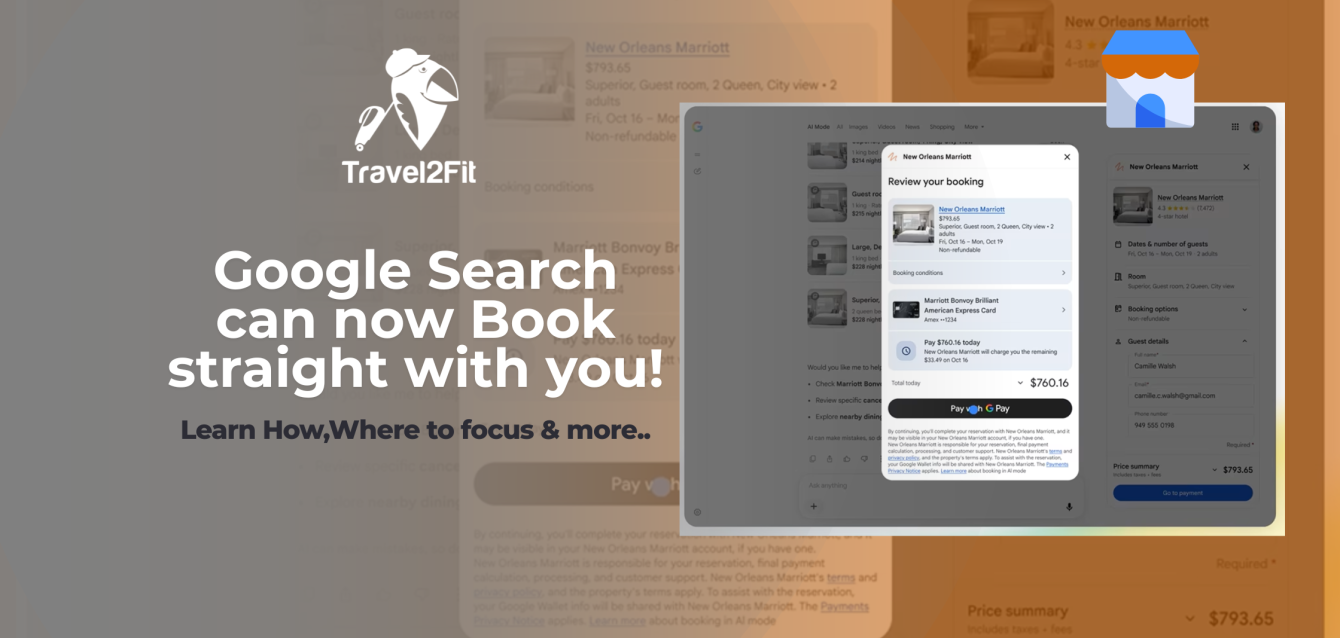
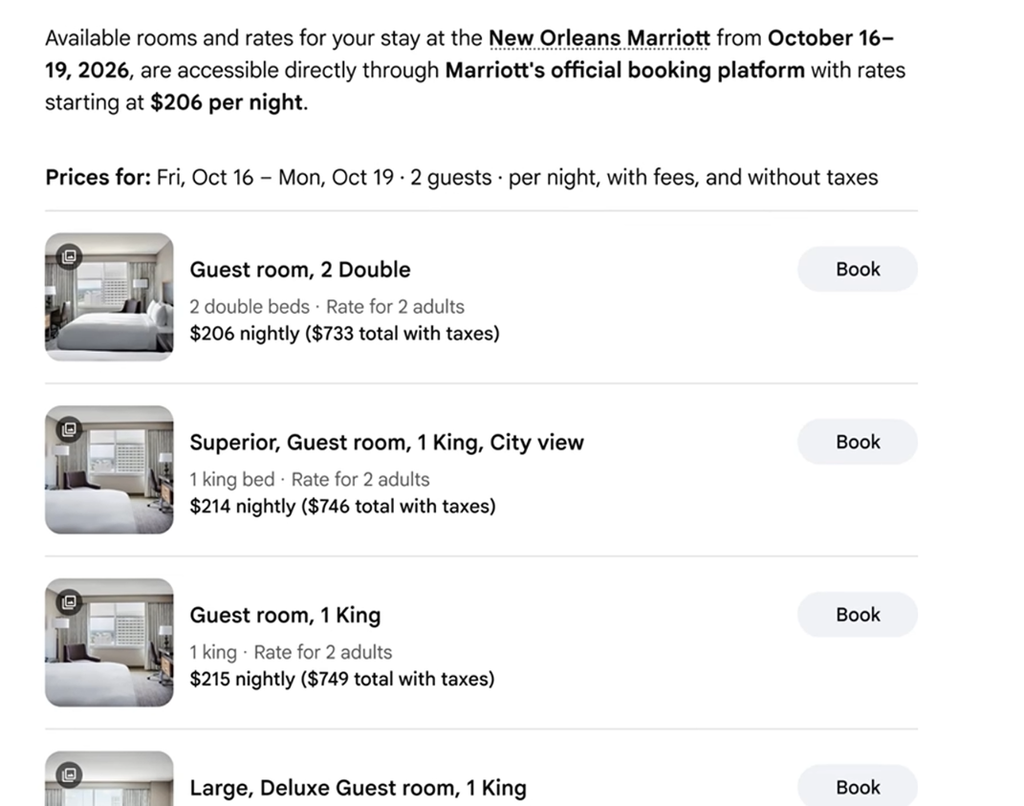
In August 2026, Google announced that travellers can search for, select and book a hotel through a single conversation in AI Mode.
With AI Mode, Google is evolving from a search engine into a digital travel advisor that can understand complex requirements, compare options and guide travellers all the way to the transaction.
Users can describe their trip and preferences, view recommended hotels with photos, reviews and key comparison points, and select “Continue on Google” to choose a room and pay with Google Pay.
The hotel or booking platform remains the merchant of record, handling confirmations, changes, cancellations and customer service.
The feature launched in English in the United States with partners including major hotel groups and OTAs such as Booking.com and Expedia. It is not yet universally available, but it clearly indicates where Google is heading.
Travellers no longer need to perform multiple searches. They can simply ask:
“Find me a quiet beachfront hotel in Crete for a family with two children, with activities, flexible cancellation and a total budget of up to €2,500.”
AI can interpret the complete intent and perform parallel searches across prices, locations, amenities, reviews and other relevant criteria. Google describes this process as “query fan-out.”
The critical question for a hotel is therefore no longer simply:
“Do we appear for the right keyword?”
It is:
“Can Google understand which traveller, trip and specific need our hotel is best suited for?”
Direct booking is being redefined
For years, direct booking was closely associated with a visit to the hotel’s official website. In this new environment, however, a traveller may never visit the hotel’s homepage. Discovery, comparison and part of the transaction can all take place within Google.
A direct-booking strategy must therefore go beyond driving more traffic to the hotel website.
Hotels need accurate and consistent information across the entire digital ecosystem: rates, availability, room types, cancellation policies, amenities, photos, reviews and booking links.
Google’s free booking links also remain important. Their ranking is influenced by factors including the value offered to travellers, the landing-page experience and the historical accuracy of the rates supplied to Google.
ETHERIA can help
ETHERIA does not replace Google, Hotel Center or a hotel’s booking engine. Nor is it a shortcut that guarantees a property will appear in AI Mode responses.
Its value begins after AI has helped the traveller discover the property.
1. Turning AI discovery into direct communication
Even after finding a hotel through AI, a traveller may still have special requests that cannot be handled through a standard booking flow.
A family may need connecting rooms, a private transfer and specific meal arrangements. A group, villa booking or event may require multiple options, different arrival times, extra services or personalised pricing.
At that point, the traveller wants to communicate directly with the hotel.
ETHERIA can centralise enquiries from the hotel website, email, telephone, WhatsApp and social media. It helps hotel teams organise each traveller’s requirements and turn them into personalised eProposals and eQuotes.
The opportunity created by AI is therefore not lost in an inbox, a contact form or a fragmented conversation. It becomes a structured direct-sales opportunity that the hotel can manage and follow up.
2. Making upselling more important than ever
As AI makes hotel discovery and room comparison faster, accommodation itself risks becoming increasingly standardised.
Upselling gives hotels an opportunity to compete on the complete experience rather than room price alone.
Through ETHERIA, a hotel can enrich a personalised proposal with relevant services such as airport transfers, dining, spa treatments, excursions, activities or special occasion packages.
This is not simply about adding more products to an offer. It is about using the guest’s stated needs to recommend services that make the stay more relevant and valuable.
Hotels can also see when a potential guest opens or interacts with a proposal, helping their teams follow up at the right moment.
In this way, ETHERIA acts as the conversion layer between AI-generated interest and direct revenue. Google may create the opportunity, but direct communication, personalisation, relevant upselling and effective follow-up determine who ultimately wins the guest—and how much value the hotel can generate from the booking.
What hotels should do today?
There is no need to panic or chase a supposed “AI optimisation hack.” Hotels should instead focus on consistency:
- Keep the Google Business Profile complete and up to date.
- Maintain accurate rates and availability.
- Publish clear, original and useful content.
- Provide high-quality photography and complete property information.
- Offer a fast and reliable booking experience.
- Create an easy path for travellers with special requests to communicate directly.
- Use personalised upselling to increase both guest value and booking revenue.
- Manage every enquiry that cannot be completed instantly.
Google is no longer simply the gateway to a hotel booking. It is becoming part of the booking itself.
In this new environment, hotels that combine accurate data, a strong digital presence and personalised management of complex enquiries will be better positioned to retain control of the guest relationship.